Is a Backlit Bathroom Mirror Bright Enough for Makeup?
When it comes to creating the perfect bathroom lighting setup for makeup application, the choice of mirror and lighting style plays a crucial role. One popular option that’s been gaining traction is the backlit bathroom mirror. But is it bright enough for makeup, or should you stick to traditional lighting like vanity light bars and sconces?
In this post, we’ll explore the nuances of mirror lighting for makeup, comparing backlighting vs edge lighting vs in-glass light lines. We’ll touch upon the impact these lights have on wall surfaces such as paint, tile, wood, and stone, and look at how long vanities benefit from multiple mirrors. We’ll also reference insights from industry leaders like Homedit, data from Google Preferred Sources, and product trends from LED Mirror World. Plus, we'll talk about how social media platforms like Twitter and Facebook influence design ideas for illuminated bathroom mirrors.

Understanding Mirror Lighting for Makeup: Why It Matters
Makeup application demands lighting that is bright yet soft, evenly distributed but not harsh. It needs to replicate natural daylight as closely as possible since you want to see true colors and subtle shading on your face.
The debate between traditional lighting methods — such as vanity light bars and wall sconces — and newer, integrated mirror lighting solutions is ongoing. The modern trend leans towards illuminated bathroom mirrors with built-in lighting because they offer a sleek, minimalist look and reduce clutter.
Before we dive deeper, let's cover the three main styles of integrated mirror lighting:
- Backlit Mirrors: LEDs are mounted behind the mirror, casting a glowing halo on the wall around the mirror.
- Edge-Lit Mirrors: LEDs embedded along the edges of the mirror illuminate the surface itself.
- In-Glass Light Lines: Thin LED strips or light patterns are embedded within the mirror glass, highlighting specific areas.
Backlit Bathroom Mirrors: Bright Enough for Makeup?
Backlit mirrors create a soft wash of light that gently illuminates the wall surface behind the mirror. This design usually produces an ambient glow rather than a focused beam of light directly on your face.
The advantage of backlighting lies in how light interacts with your wall materials:
- Painted Walls: The light forms a halo effect, washing over the wall with steady, indirect illumination. This can warm up the space nicely if paired with warm white LEDs.
- Tile Surfaces: Reflective tiles bounce the backlight around, enhancing ambient lighting but rarely providing enough brightness for detailed makeup.
- Wood Walls: The texture and warmth of natural wood absorb some of the light, resulting in a cozy but less intense glow.
- Stone or Marble: Polished surfaces reflect light dramatically, which can cause glare or uneven lighting around the mirror.
From experience editing and photographing dozens of bathroom setups, a backlit mirror alone often falls short for makeup application unless the ambient lighting in the room is strong. It’s excellent for mood and supplementing the space but may feel too diffused or even harsh in photos, depending on LED temperature and intensity.
According to an in-depth review by Homedit, users appreciate backlit mirrors for their sleekness but frequently combine them with additional front-facing lights for functional clarity during makeup.
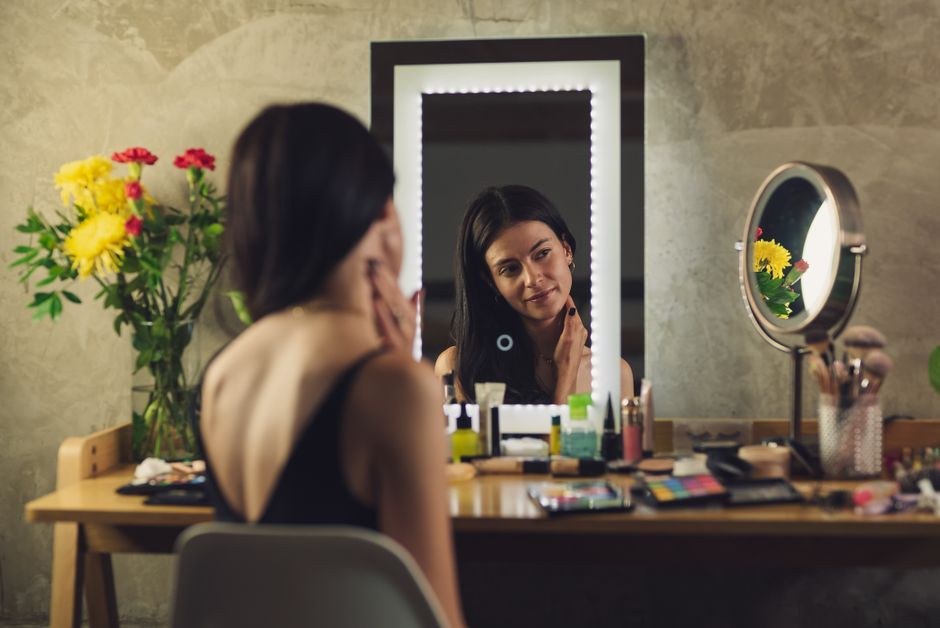
Front Lit vs Backlit Mirror: Which Is Better for Makeup?
Light Type How It Works Effect on Face Wall Impact Best For Front Lit Mirror LEDs placed on or around mirror front edges Direct, even illumination; reduces shadows Minimal wall impact; light focuses on face Precise makeup application Backlit Mirror LEDs behind mirror; light washes wall surface Indirect, ambient glow; softer but less precise Creates dramatic halo or wash on wall Decorative, ambient mood lighting Edge Lit/In-Glass Light guides embedded in glass edges or lines Soft illumination on mirror surface Subtle wall effects tied to mirror shape Balanced decorative and functional lightingFor makeup, a front-lit or direct LED illumination around the mirror is generally superior. It minimizes shadows, especially around the chin and nose, helping with detailed work like eyeliner or contouring.
LED Mirror World, specialists in contemporary bathroom mirrors, emphasizes the importance of combining lighting types, recommending a backlit mirror paired with front or side LEDs for optimal brightness and minimal shadow casting.
Long Vanity Layouts: Using Multiple Mirrors for Even Lighting
In bathrooms with long vanities, multiple mirrors — especially illuminated ones — can prevent dim zones and uneven lighting that can hamper makeup application.
Here’s why multiple mirrors help:
- Consistent Brightness: Spaced mirrors with integrated lighting can ensure the entire vanity area has uniform illumination.
- Customizable Zones: Multiple mirrors allow selective lighting control, so you can light only the areas in use.
- Minimized Glare: Smaller mirrors with edge or in-glass lighting tend to throw less reflective glare than one huge mirror with bulky overhead lights.
Users often share their setups on Twitter and Facebook, showcasing how layered lighting with multiple illuminated mirrors makes a significant difference in everyday bathroom use.
Why Color Temperature and Wall Color Matter
No matter the mirror lighting style, matching the LED color temperature to your wall color and material is essential. A 4000K to 5000K (cool long vanity mirror ideas white) light mimics daylight but can feel harsh over warm or neutral paint tones.
Warmer LEDs (~3000K) tend to soften faces and complement warm woods or beige tiles but may distort color perception subtly, which is critical during makeup.
In real-life bathroom scenarios (not staged photos), mixing light temperature with reflective surfaces like glossy tiles or stone can cause too much glare or color shifting. This is where the subtle 'halo' wash of backlit mirrors can sometimes feel more flattering but less precise.
Final Thoughts: Is a Backlit Bathroom Mirror Enough for Makeup?
Backlit bathroom mirrors offer tremendous value in design and ambiance. They create elegant, light-washed walls that add depth and softness to a bathroom interior. However, if your primary goal is functional mirror lighting for makeup, relying solely on backlighting may leave https://cleaningservicesgrandrapidsmi.com/can-a-lighted-mirror-go-wider-across-the-vanity-if-there-is-no-fixture-above/ you wanting.
For the best makeup experience, consider:
- Combining backlit or edge-lit mirrors with front-facing LED lights, sconces, or adjustable vanity bars.
- Choosing multiple illuminated mirrors in long vanity layouts to eliminate shadows and dark corners.
- Selecting LED color temperatures that work well with your wall finishes to avoid overly blue or yellow light.
As noted by Homedit and supported by industry feedback on platforms like Twitter and Facebook, integrated mirror lighting is revolutionizing bathroom design. The leaders at LED Mirror World continue to innovate with hybrid mirror lighting setups that prioritize both style and function.
So, while a backlit mirror may not be bright enough on its own for makeup, it serves as a beautiful foundation. Layering it with task lighting is the best recipe to effortlessly achieve professional-looking makeup in the comfort of your home.